Tag Archives: cerebral palsy

Girl with Cerebral Palsy reading.

Picture Exchange Communication System (PECS)

Picture Exchange Communication System (PECS) was created in 1985 for young children with Autism. Over the years it is now being introduced to most children who are non verbal.

This is quite interesting how it is taught.

Phase I teaches the physical exchange of a picture; no discrimination is required.

Phase II teaches distance and persistence.

Phase III: Picture discrimination skills are introduced: first through pairings of preferred and non-preferred pictures.

Phase IV: Sentence structure is introduced: the simple request will now consist of the sentence starter “I want” + a picture of the desired item/activity placed on a Sentence Strip.

In Phase V, the PECS user is taught to expand on basic skills with the addition of attributes.

In Phase VI, individuals learn to make comments on interesting stimuli in the environment.

Here are a few videos of how PECS is used. Andy has completed all 6 phrases.

Andys PECS video part 1

Andy’s PECS video part 2

For more information regarding PECS…

http://www.autism-society.org/living-with-autism/treatment-options/pecs.pdf

Andy, Born Feb 4 2000 (Agpar Score 0,0,0,4 at 15 min, heartbeat @ 17 mins) 12 years old. HIE (Came home with G-Tube, Removed @ 14 mos.) Hypotonic, later dx’ed Mixed CP. Hydrocephalus has VP Shunt (revised 2000 & 2012) GMFM II almost Level I. Walks Independently but not well enough to play sports. Non-verbal. Uses ASL.

photo credit: thejbird via photopin cc

Hippotherapy Locations

chum-therapy-karen-pic-300x300

AmericanHippotherapyAssociation.org

California

STRIDES…Granada Hills, CA

Saddle Pals…Grass Valley, CA

Balance In the Saddle…Sacramento, CA

Progressive Equine Assisted Therapy Physical Therapy & Rehab Services…San Francisco, CA

Colorado

The NARHA-Professional Association of Therapeutic Horsemanship International…Denver, CO

Georgia

Kids in Motion…Villa Rica, Georgia

Michigan

CHUM Therapeutic Riding…Dansville MI

Equest Center for Therapeutic Riding…Rockford MI

New York

Pal-O-Mine Equestrian…Adapted riding starts at 2 yrs old. They have other programs like Respite, Equine Assisted Learning programs, Work Program and a few others…Islandia, NY

North Carolina

Miracle Meadows…Jacksonville NC

Ohio

The Camelot Center…Southington, Ohio

Pegasus Farm…Hartville, Ohio

Pennsylvania

Sebastian Riding Associates…Collegeville, PA

Spring Brook Farm…no hippotherapy, but individualized programs for children with special needs and animals, summer camps, etc…West Chester, PA

Utah

>Freedom Riders

Therapeutic Assets…Taylor, Utah

Virginia

Horseplay Therapeutic Riding Program…Midlothian, VA

Washington

Little Bit Therapeutic Riding Center…Woodinville, WA

Mikey-hippotherapypic2-300x225

TheraSuit Intensive Therapy

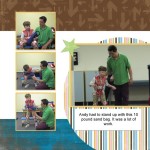
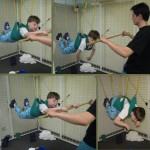
Andy in Therapy at Movement Discoveries in San BrunoJune 2007, I was able to take Andy to Movement Discoveries located in San Bruno, CA. This was a 3 week program. Monday through Friday, 4 hours per day.

When we arrived,  it was only 8 weeks after he had foot surgery. One of the therapists was a little worried it was too soon after surgery. However, Andy was a trooper and worked through it.

He had 2 tendon transfers and an Achilles transfer on his left ankle. 2 weeks before he had his cast removed.  His foot was still recovering because it would swell up. We could tell the first week it was still pretty sore because he didn't want to put a lot of pressure on it, but through it all, he still did everything Adam and Matt asked him to do, and then some. By the end of the first week, without braces, Andy was able to walk from the hotel room to the van. This is quite a walk from the parking lot since we had a room in the courtyard.  The last week and a half, he had been learning to stand up from the ground. See the video at the end of the page….

I have to say after this 3 week program, Andy didn't have to use his wheelchair or his walker. He did need, and still does need a lot of breaks when walking long distances.

For more information about TheraSuit Intensive Therapy and finding a Provider in your area….click on the link below….

www.suittherapy.com

About Andy

Andy, Born Feb 4 2000 (Agpar Score 0,0,0,4 at 15 min, heartbeat @ 17 mins) 12 years old. HIE (Came home with G-Tube, Removed @ 14 mos.) Hypotonic, later dx'ed Mixed CP. Hydrocephalus has VP Shunt (revised 2000 & 2012) GMFM II almost Level I. Walks Independently but not well enough to play sports. Non-verbal. Uses ASL.
Parents: Kristi & Bruce Siblings: Luke/Maddie

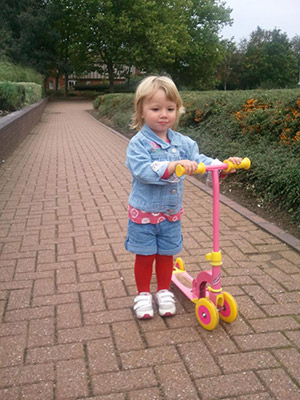
Ella with her scooter.

Cooling Treatment for HIE

 
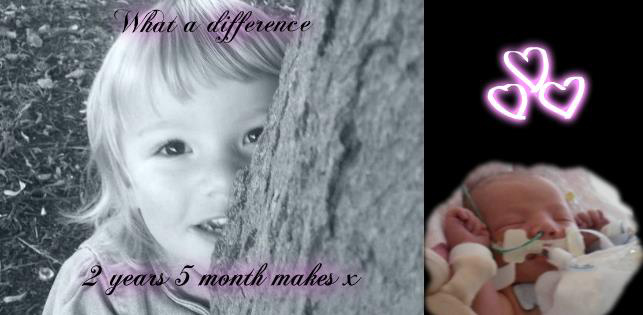
Rachel Claxton, mother of 2-year old Ella, talks about a potentially fatal brain damage that can happen to any newborn child during labor and an effective treatment option available now. Ella had the cooling treatment at birth to reduce the brain damage from Hypoxic Ischaemic Encephalopathy (HIE). HIE happens when due to reasons like difficult labor, twisted or compressed umbilical cord, etc. enough oxygen does not reach the brain and therefore the brain cells begin to die causing long-term damages like seizures, intellectual disability, and cerebral palsy. This video is an effort by Rachel to build awareness of the cooling treatment.


Ella’s story

Read about Ella’s story.
Ella

Ella 

Jordon Milroy quote.

Jordon Milroy: Defying Limits with Cerebral Palsy

Here is the story of a young man with CP who will not let his disability stop him. He wanted to show he could do what he set his mind to an he has been climbing the stairs of the highest buildings in Australia and New Zealand.  Check out his story. It is truly inspirational!

🌱 Early Life and Barriers

Jordon Milroy was born in Sāmoa with cerebral palsy caused by HIE, a condition that affects muscle coordination and movement. From the beginning, he faced a world that underestimated him. Denied entry into mainstream education for five years, he was forced to study remotely from Wellington, New Zealand. Despite the isolation, he excelled academically and proved his intellectual strength.

Eventually, he gained admission to local schools, where he thrived both socially and academically. Teachers recognized his potential, while classmates admired his determination. Later, he earned a Bachelor of Communication in Public Relations — a degree that would become central to his advocacy work and public outreach.

🧠 Challenging Perceptions

Throughout his life, Jordon encountered discrimination in subtle and overt forms. Rather than retreat, he chose to confront these biases directly. One of his most powerful initiatives was a social experiment that quickly went viral. In it, he and an able-bodied friend approached strangers in public, asking for help. When Jordon made the request, people often ignored or dismissed him. In contrast, his friend received warm and helpful responses.

This stark difference revealed the unconscious bias many hold toward people with disabilities. Instead of using the experiment to shame others, Jordon used it to spark conversation. Media outlets picked up the story, and public dialogue followed. As a result, many began to reflect on their own behavior and assumptions.

🏔️ Climbing Towers, Raising Awareness

Jordon’s advocacy extends beyond words. He has physically climbed some of the tallest towers in the world, including Auckland’s Sky Tower, to raise awareness and funds for causes such as the Fire Brigade and leukemia research. These climbs are more than symbolic gestures — they are bold declarations of strength and visibility.

Each ascent required intense preparation, physical endurance, and mental resilience. By reaching the summit, he demonstrated that disability does not equate to weakness. His actions inspired thousands and challenged society’s narrow definitions of capability.

🚗 Driving Toward Freedom

For Jordon, learning to drive marked a turning point. While many see driving as routine, he viewed it as a gateway to independence. With a specially adapted vehicle and modified hand controls, he earned his license and began navigating life on his own terms.

In a personal reflection, he described the experience as “pure freedom.” Driving gave him more than mobility — it gave him autonomy, confidence, and a renewed sense of self. This milestone reinforced his belief that independence is achievable, even in the face of physical challenges.

Check the YouTube video here:

📣 Advocacy and Impact

Jordon’s voice resonates across schools, conferences, and media platforms. He challenges institutions to rethink accessibility and urges society to embrace inclusive practices. His focus includes education, employment, and representation — areas where people with disabilities are often overlooked.

Rather than seek personal recognition, he prioritizes community empowerment. His message is clear: real change begins with empathy, awareness, and action. Through writing, speaking, and public engagement, he amplifies the voices of those who are too often silenced.

Moreover, Jordon leads with humility and humor. His approach is honest, never bitter, and always rooted in hope. He believes in lifting others as he climbs, creating space for future generations to thrive.

🌍 A Legacy of Strength

Jordon Milroy’s story is not just about living with cerebral palsy — it’s about living fully, fearlessly, and with purpose. He transforms pain into power, exclusion into empowerment, and doubt into determination. His life challenges assumptions and redefines what it means to be strong.

By sharing his journey, he reminds us that ability is not measured by muscle or motion, but by mindset, courage, and heart. He encourages us to look beyond appearances, listen more deeply, and treat everyone with dignity.

As he continues to climb — towers, barriers, and expectations — Jordon invites us to climb with him. His legacy is one of resilience, compassion, and unwavering belief in human potential.

179943_406932222691294_1970791789_n-150x150

389617_364748450243005_706464766_n-150x150

580622_364748543576329_1125627027_n-150x150

first-150x150

Children with Cerebral Palsy

What is Cerebral Palsy?

Reprinted from the Centers for Disease Control and Prevention:

Cerebral palsy (CP) is a group of disorders that affect a person’s ability to move and maintain balance and posture. CP is the most common motor disability in childhood. Cerebral means having to do with the brain. Palsy means weakness or problems with using the muscles. CP is caused by abnormal brain development or damage to the developing brain that affects a person’s ability to control his or her muscles.

The symptoms of CP vary from person to person. A person with severe CP might need to use special equipment to be able to walk, or might not be able to walk at all and might need lifelong care. A person with mild CP, on the other hand, might walk a little awkwardly, but might not need any special help. CP does not get worse over time, though the exact symptoms can change over a person’s lifetime.

All people with CP have problems with movement and posture. Many also have related conditions such as intellectual disability Adobe PDF file; seizures; problems with vision Adobe PDF file, hearing, or speech; changes in the spine (such as scoliosis); or joint problems (such as contractures).


Types of Cerebral Palsy

Doctors classify CP according to the main type of movement disorder involved. Depending on which areas of the brain are affected, one or more of the following movement disorders can occur:

  • Stiff muscles (spasticity)
  • Uncontrollable movements (dyskinesia)
  • Poor balance and coordination (ataxia)


There are four main types of CP:

Spastic Cerebral Palsy

The most common type of CP is spastic CP. Spastic CP affects about 80% of people with CP.

People with spastic CP have increased muscle tone. This means their muscles are stiff and, as a result, their movements can be awkward. Spastic CP usually is described by what parts of the body are affected:

  • Spastic diplegia/diparesis―In this type of CP, muscle stiffness is mainly in the legs, with the arms less affected or not affected at all. People with spastic diplegia might have difficulty walking because tight hip and leg muscles cause their legs to pull together, turn inward, and cross at the knees (also known as scissoring).
  • Spastic hemiplegia/hemiparesis―This type of CP affects only one side of a person’s body; usually the arm is more affected than the leg.
  • Spastic quadriplegia/quadriparesis―Spastic quadriplegia is the most severe form of spastic CP and affects all four limbs, the trunk, and the face. People with spastic quadriparesis usually cannot walk and often have other developmental disabilities such as intellectual disability; seizures; or problems with vision, hearing, or speech.


Dyskinetic Cerebral Palsy (also includes athetoid, choreoathetoid, and dystonic cerebral palsies)

People with dyskinetic CP have problems controlling the movement of their hands, arms, feet, and legs, making it difficult to sit and walk. The movements are uncontrollable and can be slow and writhing or rapid and jerky. Sometimes the face and tongue are affected and the person has a hard time sucking, swallowing, and talking. A person with dyskinetic CP has muscle tone that can change (varying from too tight to too loose) not only from day to day, but even during a single day.


Ataxic Cerebral Palsy

People with ataxic CP have problems with balance and coordination. They might be unsteady when they walk. They might have a hard time with quick movements or movements that need a lot of control, like writing. They might have a hard time controlling their hands or arms when they reach for something.


Mixed Cerebral Palsy

Some people have symptoms of more than one type of CP. The most common type of mixed CP is spastic-dyskinetic CP.


Early Signs

The signs of CP vary greatly because there are many different types and levels of disability. The main sign that a child might have CP is a delay reaching motor or movement milestones (such as rolling over, sitting, standing, or walking). Following are some other signs of possible CP. It is important to note that some children without CP also might have some of these signs.

In a Baby Younger Than 6 Months of Age
  • His head lags when you pick him up while he’s lying on his back
  • He feels stiff
  • He feels floppy
  • When held cradled in your arms, he seems to overextend his back and neck, constantly acting as if he is pushing away from you
  • When you pick him up, his legs get stiff and they cross or scissor

mother holding daughter

In a Baby Older Than 6 Months of Age
  • She doesn’t roll over in either direction
  • She cannot bring her hands together
  • She has difficulty bringing her hands to her mouth
  • She reaches out with only one hand while keeping the other fisted


In a Baby Older Than 10 Months of Age
  • He crawls in a lopsided manner, pushing off with one hand and leg while dragging the opposite hand and leg
  • He scoots around on his buttocks or hops on his knees, but does not crawl on all fours

Tell your child’s doctor or nurse if you notice any of these signs. Learn more about developmental milestones that children should reach from birth to 5 years of age »


Screening and Diagnosis

Diagnosing CP at an early age is important to the well-being of children and their families. Diagnosing CP can take several steps:

Developmental Monitoring

Developmental monitoring (also called surveillance) means tracking a child’s growth and development over time. If any concerns about the child’s development are raised during monitoring, then a developmental screening test should be given as soon as possible.


Developmental Screening

During developmental screening a short test is given to see if the child has specific developmental delays, such as motor or movement delays. If the results of the screening test are cause for concern, then the doctor will make referrals for developmental and medical evaluations.


Developmental and Medical Evaluations

The goal of a developmental evaluation is to diagnose the specific type of disorder that affects a child.

Learn more about screening and diagnosis »


Treatments and Intervention Services

According to the CDC, “There is no cure for CP”, but treatment can improve the lives of those who have the condition. It is important to begin a treatment program as early as possible.

After a CP diagnosis is made, a team of health professionals works with the child and family to develop a plan to help the child reach his or her full potential. Common treatments include medicines; surgery; braces; and physical, occupational, and speech therapy. No single treatment is the best one for all children with CP. Before deciding on a treatment plan, it is important to talk with the child’s doctor to understand all the risks and benefits. The BRIGHT CP Cure Program is driving towards a true cure for CP.

Visit the NINDS Cerebral Palsy Information Page to learn more about current treatments for CP »External Web Site Icon


Intervention Services
Both early intervention and school-aged services are available through our nation’s special education law—the Individuals with Disabilities Education Act (IDEA). Part C of IDEA deals with early intervention services (birth through 36 months of age), while Part B applies to services for school-aged children (3 through 21 years of age). Even if your child has not been diagnosed with CP, he or she may be eligible for IDEA services.

Learn more about IDEA Services »


Causes and Risk Factors

CP is caused by abnormal development of the brain or damage to the developing brain that affects a child’s ability to control his or her muscles. There are several possible causes of the abnormal development or damage. People used to think that CP was mainly caused by lack of oxygen during the birth process. Now, scientists think that this causes only a small number of CP cases.

The brain damage that leads to CP can happen before birth, during birth, within a month after birth, or during the first years of a child’s life, while the brain is still developing. CP related to brain damage that occurred before or during birth is called congenital CP. The majority of CP (85%–90%) is congenital. In many cases, the specific cause is not known. A small percentage of CP is caused by brain damage that occurs more than 28 days after birth. This is called acquired CP, and usually is associated with an infection (such as meningitis) or head injury.

Learn more about causes and risk factors for CP »


If You’re Concerned

If you think your child is not meeting movement milestones or might have CP, contact your doctor or nurse and share your concerns.

If you or your doctor is still concerned, ask for a referral to a specialist who can do a more in-depth evaluation of your child and assist in making a diagnosis.

At the same time, call your state’s public early childhood system to request a free evaluation to find out if your child qualifies for intervention services. This is sometimes called a Child Find evaluation. You do not need to wait for a doctor’s referral or a medical diagnosis to make this call.

Where to call for a free evaluation from the state depends on your child’s age:

  • If your child is not yet 3 years old, contact your local early intervention system.You can find the right contact information for your state by calling the National Dissemination Center for Children with Disabilities (NICHCY) at 1-800-695-0285.Or visit the NICHCY websiteExternal Web Site Icon. Once you find your state on this webpage, look for “Programs for Infants and Toddlers with Disabilities”.Learn more about early intervention »External Web Site Icon
  • If your child is 3 years of age or older, contact your local public school system.Even if your child is not yet old enough for kindergarten or enrolled in a public school, call your local elementary school or board of education and ask to speak with someone who can help you have your child evaluated.If you’re not sure who to contact, call the National Dissemination Center for Children with Disabilities (NICHCY) at 1.800.695.0285 or visit the NICHCY websiteExternal Web Site Icon. Once you find your state on this webpage, look for the heading “Programs for Children with Disabilities”.

photo credit: easystand via photopin cc