
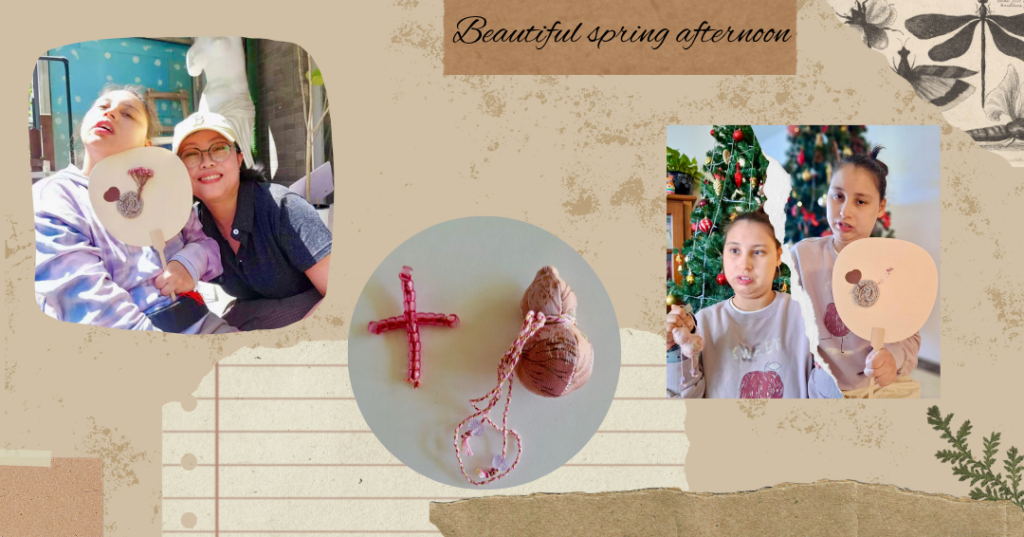
I met Alissa on a beautiful spring afternoon.
We sat together in a small courtyard, making a preserved-flower fan. With a single strand of hemp rope, we crocheted a thicker, textured rope. Then we shaped a vase on a blank round fan with masking tape and placed dried flowers in just the right positions. Step by step, an elegant handmade fan came to life.
When Care Means Understanding Small Signals
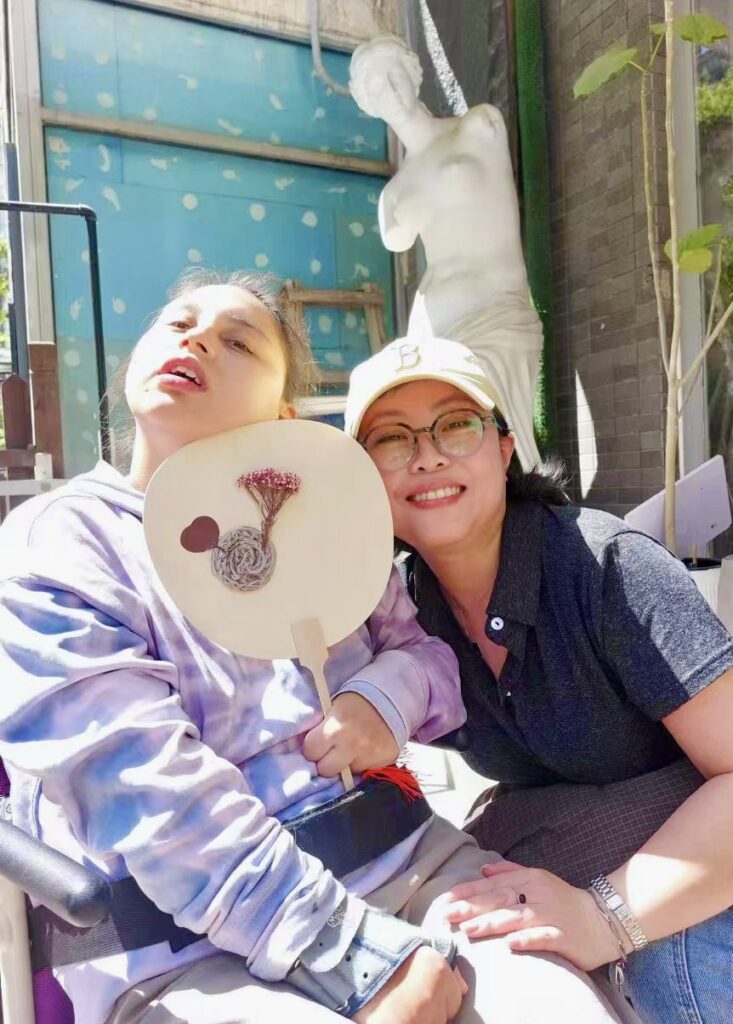
Alissa was highly engaged throughout the activity. She made clear choices between different fan shapes and selected flowers that matched her own preferences.
This participation was closely connected to how well her father understood her intentions. Matt could read her small movements, subtle looks, and facial expressions with remarkable accuracy.
To me, this was a powerful example of what deep cerebral palsy care can look like in real life. It was not only about helping Alissa complete an activity. It was about understanding her, respecting her choices, and supporting her participation.
A Second Session Without the “Super Translator”
The second time we worked together, Alissa came with her auntie. Without Matt— my “super translator,” I felt less certain about how to read some of Alissa’s expressions.
I used music to help calm and support her. Then came a small misunderstanding: when Alissa typed “dis” on the keyboard, I thought she meant “disco.” What she actually wanted was “Disney!”
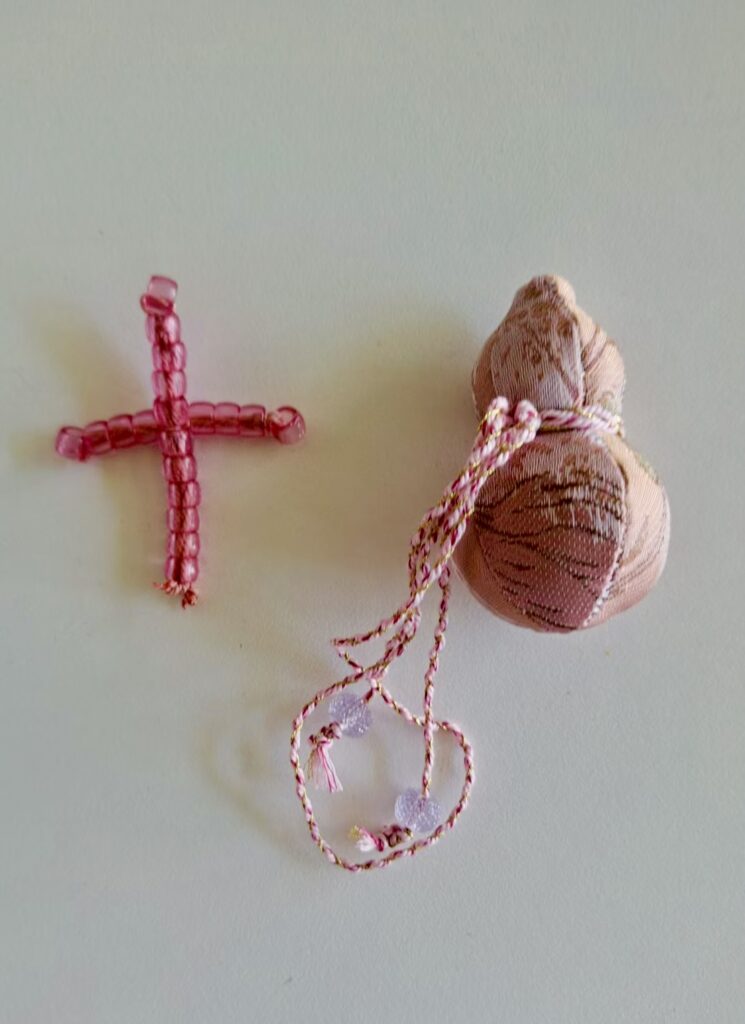
Fortunately, we eventually understood each other. She listened to the music she liked and continued working with me. Together, we strung beads, practiced counting, and figured out how many beads were needed to make the shape of a cross.
Once again, Alissa made her preferences clear. Green beads or pink beads? Blue string or pink string? She chose pink every time. It seems she really loves pink!
Seeing the Child Beyond the Care Burden
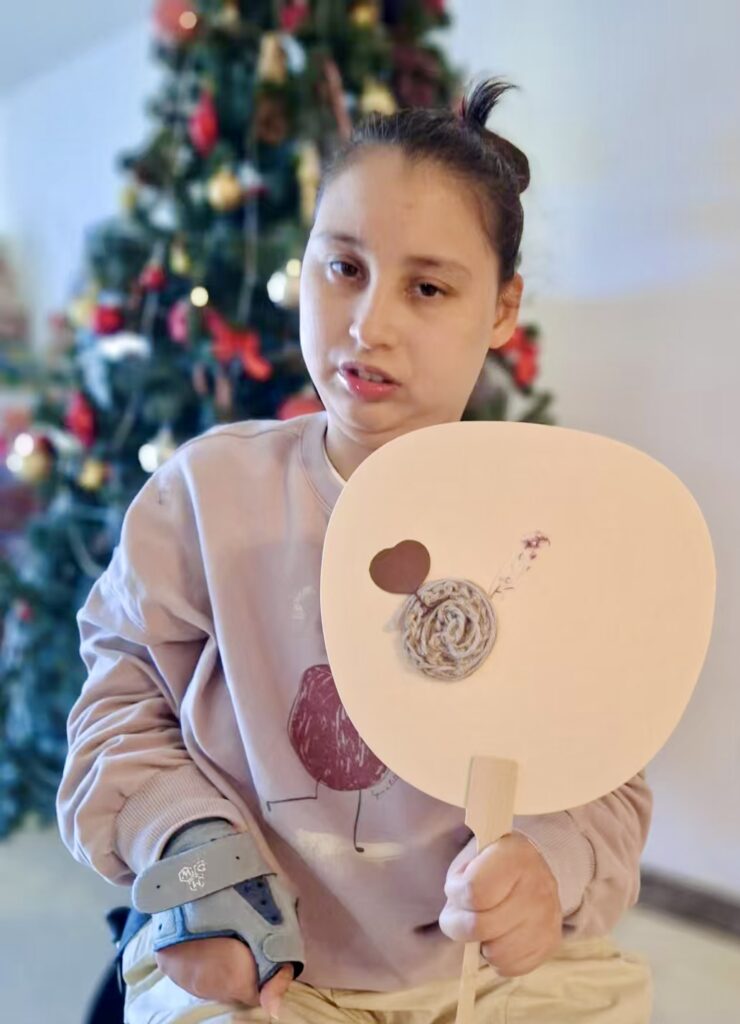
Alissa reminded me that children with cerebral palsy may have very clear preferences, interests, and opinions. But we need to slow down, observe carefully, and give them enough time to express themselves.
This is one of the most important lessons in cerebral palsy caregiver support: communication may take longer, but that does not mean the child has less to say!
For families living with cerebral palsy, care is not only about therapy sessions or medical appointments. It is also about daily observation, small choices, emotional support, and the quiet wisdom caregivers build through lived experience.
Alissa is a happy little girl. She has a family who loves her, respects her, understands her, and continues to try different ways to support her rehabilitation, care, and daily participation.
That matters deeply.
Lived Experience Notes
Why are hands-on practices like this important for cerebral palsy?
- Why are hands-on practices like this important for cerebral palsy?
Hands-on activities can support participation, choice-making, fine motor practice, attention, communication, and confidence. For children with cerebral palsy, activities such as crafts, bead-stringing, or music-based interaction can create meaningful opportunities to express preferences and engage with others. - How can caregiver support help families affected by cerebral palsy?
Caregiver support helps families feel less isolated and more equipped for daily challenges. It can include practical care tips, emotional support, shared lived experience, communication strategies, and encouragement from families who understand the reality of long-term cerebral palsy care.

Beatrice Wang is a professional fashion designer with strong expertise in pattern making. She combines solid technical skills with a refined and distinctive creative perspective.
Passionate about all forms of handmade craft, she specializes in patchwork, embroidery, and accessory design. Through needle, thread, and fabric, she brings craftsmanship, warmth, and care into every piece she creates.