
The Reality of Connection: Moving Beyond the “Perfect” Narrative
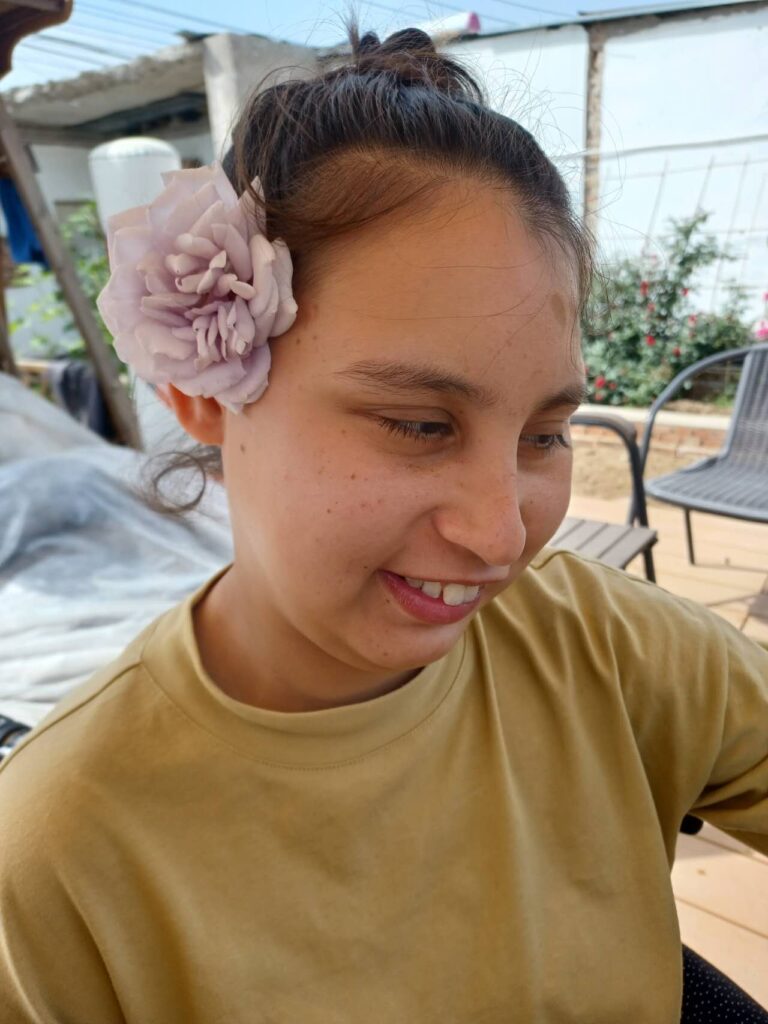
The first time I met Alissa, she appeared from a side entrance, gently being pushed in her wheelchair. I vividly remember the look in her eyes, full of hope, and the smile that lit up her face. Without a word, she reached out, took my hands, and kissed them. That simple yet profound gesture of welcome moved me deeply.
I introduced myself, and her dad gave me a brief introduction to his daughter.
In our next session, I was alone with Alissa. She agreed to do some coloring, and I drew a picture of her favorite city, Paris. She chose the colors she wanted, and with one finger, she gently guided my hand to help her color. We worked on the Eiffel Tower, the Seine River with a bateau-mouche, and the Louvre Pyramid. After about 20 minutes, she started to feel tired and asked to watch a video. Fortunately, I couldn’t connect to YouTube that morning. I then attempted to start a conversation, but quickly realized I was unprepared and out of my depth. Alissa can’t speak, but she communicates by answering yes or no. I felt a wave of frustration after each open question I asked, realizing I was causing her more frustration by not being able to engage her more fully.
I decided then to try open-ended questions about dating. Surprisingly, I was able to catch her attention. The hour we spent together was challenging for both of us, yet also revealing. It’s so easy to think I can plan and know exactly what to do or say with Alissa, but I quickly learned that her mix of vitality, frustration, and hope is disorienting. She’s not just a child; she’s an adult, eager to make connections with others, just like anyone else.
A father’s advice: A personal insight from Matt Palaszynski, CP Advocate & Parent
In a recent exchange between a teacher and a father, the curtain was pulled back on the complexities of supporting a person with significant neurodiversity. The conversation began with a moment of doubt—a feeling many of us face: “Am I actually making a difference, or am I just a source of frustration?”
The father’s response was a powerful reminder of the hidden battles behind the behavior. He shared the gravity of Alissa’s journey—surviving massive trauma at birth—and the reality that her “short fuse” or lack of focus isn’t a reflection of the teacher’s skill, but a symptom of a deep, internal struggle.
Key takeaways from our honest dialogue:
Overcoming the “Social Media Trap”: Dealing with Comparison in the CP Community
The Struggle: The “Highlight Reel” vs. Messy Reality
We often feel like failures because we compare our messy, 2:00 AM reality to the “perfect stories” we see in curated Instagram feeds. In our house, progress is rarely a straight line; it’s a zig-zag of small wins and significant setbacks. When we see another child with CP hitting a milestone we are still miles from, the “Social Media Trap” tells us we aren’t doing enough.
The “Reality Check” Strategy
- Acknowledge Non-Linear Progress: In Cerebral Palsy care, success isn’t just about a physical milestone; it’s about the effort and the bond built during the struggle.
- Curate Your Feed for Authenticity: Unfollow accounts that make you feel “less than.” Follow creators who share the “frustrations” and the “bad days” alongside the good.
- The 5-Minute Perspective Shift: When you feel that “social media letdown,” stop scrolling and name one thing—no matter how small—that went right for your child today.
Why Authenticity is Your Greatest Tool
Lived experience teaches us that being “perfect” is an impossible standard that leads to burnout. By embracing the “Win in the Struggle,” we show our children that their value isn’t tied to a highlight reel. It’s okay to admit this work is hard. In fact, admitting it is the first step toward finding real, sustainable joy.
The Weight of Expectation: Just as many feel a “letdown” on Christmas Day when reality doesn’t match the dream, Alissa often struggles when the excitement of an event meets the sensory or social challenges of the actual moment.
The Power of Assertiveness: Sometimes, the best way to support someone who is struggling is to provide firm, gentle boundaries—inviting them to focus for just five minutes, while respecting when they truly need to step away.
The “Win” in the Struggle: Authenticity means acknowledging the frustration on both sides. It’s okay to admit that this work is hard.
Connecting with a “very injured person” requires a special kind of patience. It’s not about finding a “secret to success,” but about showing up, taking the small wins when they come, and understanding that even in the grumpiness, your presence is valued.

Maria a trained Montessori teacher and student in the Master degree program at the University of Lille. She has dedicated her life to helping children and has welcomed the challenge of learning to work with children with brain injuries.